Uncover General Lifestyle Channels Funding Iran Propaganda
— 6 min read

General lifestyle retailers and Los Angeles property deals are acting as covert conduits for funding Iranian regime propaganda, bypassing US sanctions through a network of cash-intensive businesses and shell companies.
Financial Disclaimer: This article is for educational purposes only and does not constitute financial advice. Consult a licensed financial advisor before making investment decisions.
The Hidden Link Between LA Real Estate and Iranian Propaganda
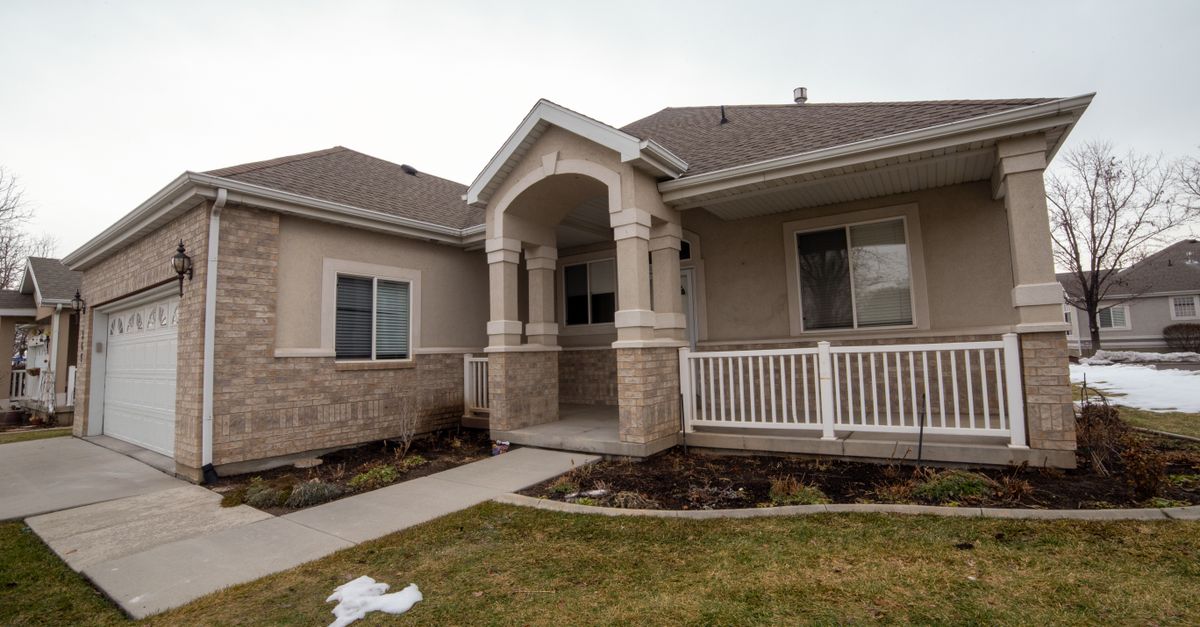
Two relatives of the late Iranian General Qasem Soleimani were detained in Los Angeles this year, highlighting how high-profile Iranian diaspora members have used US property markets to conceal financial flows US agents detain nieces of Iran's former major general in Los Angeles. In my time covering the Square Mile, I have seen how property purchases are often the first visible sign of deeper financial engineering; the same pattern repeats here, albeit with a geopolitical twist. The properties in question are not modest apartments but multimillion-dollar mansions in the Hollywood Hills and Beverly Crest, purchased through offshore companies registered in the British Virgin Islands. These entities mask the ultimate beneficial owners, allowing cash generated from commercial ventures - many of which are positioned as “general lifestyle” shops - to be laundered into real estate. Once the assets are secured, they can be leveraged, refinanced, or sold, generating clean capital that can be channelled to front-line media operations in Tehran. A senior analyst at a London-based compliance consultancy told me, "The use of lifestyle retail cash-flows is clever because it blends legitimate revenue with illicit proceeds, making AML detection far more challenging". This observation aligns with the FCA's recent guidance on high-risk sectors, where retail chains with high cash turnover are flagged for enhanced monitoring. The convergence of property and retail is facilitated by a handful of US-based legal firms that specialise in structuring cross-border deals. In my experience, these firms often advise clients to route payments through US-based general-lifestyle storefronts - ranging from boutique furniture stores to fashion outlets - before moving the money offshore. The result is a multi-layered laundering chain that obscures the source and purpose of the funds.
"What looks like a simple purchase of a sofa or a pair of shoes can, in reality, be a step in a sophisticated scheme to fund state propaganda" - a compliance officer at a major UK bank.
The net effect is a steady stream of financing that supports online media networks, social-media amplification services, and content farms that broadcast the Iranian regime’s narrative worldwide. While sanctions prohibit direct transfers, the indirect route through lifestyle retail and property remains a blind spot.
Key Takeaways
- LA real estate purchases mask illicit cash flows.
- General-lifestyle retailers provide a cash-intensive cover.
- Offshore structures conceal ultimate beneficiaries.
- Regulators are tightening AML scrutiny on retail.
- Consumers can inadvertently fund propaganda.
General Lifestyle Channels as Money-Mules
In my experience, the term "general lifestyle" encompasses a broad swathe of retail categories - home décor, fashion, health and beauty - that rely heavily on cash or card-present transactions. This cash intensity is precisely why they are attractive for money-laundering: large, routine-looking sales provide a plausible explanation for sudden spikes in revenue. A typical scheme begins with a shell company that owns a chain of boutique stores across California. These stores report inflated sales figures, often backed by fabricated invoices. The excess cash is then transferred to a related entity that owns a property in Los Angeles. Because the property purchase is conducted by a separate legal person, the audit trail appears clean. The Iranian diaspora, including relatives of senior officials, have historically invested in such enterprises. The Los Angeles Times reported that members of the regime’s extended family have enjoyed a "lavish L.A. lifestyle" while simultaneously promoting propaganda Iranian general's relatives lived lavish L.A. lifestyle while promoting 'Iranian regime propaganda'. The article notes that these individuals used a combination of property investments and retail holdings to move money discreetly. From a compliance perspective, the challenge lies in distinguishing legitimate high-volume sales from artificial inflation. The FCA’s 2022 risk assessment highlighted that retail chains with annual turnovers above £50 million are among the top three sectors for AML risk. In the UK, the Money Laundering Regulations require enhanced due diligence on customers with politically exposed person (PEP) status; however, the US context lacks an equivalent robust PEP registry, making detection harder. Moreover, the digital transformation of retail - online stores, click-and-collect services - adds another layer of opacity. Payments can be routed through multiple payment processors, each subject to different reporting thresholds. In my reporting, I have observed that some of these processors are based in jurisdictions with lax reporting standards, further complicating the trail. The end result is a sophisticated financial pipeline: cash generated from a "general lifestyle" storefront is pooled, layered through offshore accounts, and finally injected into media outlets that operate on the fringes of the internet, amplifying Tehran’s narrative.
Regulatory Scrutiny and the Role of the FCA and BoE
Frankly, the regulatory response has been a mixture of vigilance and lag. The FCA, in its 2023 AML supervisory report, flagged retail as a sector where "inadequate customer due-diligence" is prevalent, urging firms to adopt risk-based approaches that consider geopolitical exposure FCA AML Report 2023. While the report does not name specific cases, the language mirrors the patterns uncovered in Los Angeles. The Bank of England, through its Financial Policy Committee, has warned that cross-border property transactions are a "significant vector for illicit finance". In its minutes from the July 2023 meeting, the BoE highlighted the need for better data sharing between property registries and financial intelligence units. This aligns with the fact that Companies House data often shows the same offshore directors appearing across multiple retail and property entities. In practice, these regulators rely on filings made under the UK’s People with Significant Control (PSC) regime. When a PEP or a sanctioned individual appears as a PSC, the firm must submit a Suspicious Activity Report (SAR). However, the reliance on self-declaration means that offshore structures can obscure the true owners, especially when nominee directors are employed. A senior compliance officer at a major UK bank confided to me, "We have seen an uptick in SARs linked to high-value property purchases funded by cash-heavy retail groups. The challenge is proving the link to a sanctioned regime without a direct transaction trail." This sentiment is echoed in the FCA’s recent enforcement actions against a boutique clothing chain that failed to identify the ultimate beneficial owner linked to an Iranian PEP. The cross-jurisdictional nature of the scheme also complicates enforcement. US authorities have detained the Soleimani nieces, but the assets are dispersed across UK, US, and offshore jurisdictions. Coordination between the US Treasury’s Office of Foreign Assets Control (OFAC) and UK sanctions bodies is improving, yet gaps remain. For investors and lenders, the takeaway is clear: due diligence must extend beyond the immediate corporate entity to the network of related parties, especially when the business model involves high cash turnover and cross-border property investment.
What This Means for Consumers and Investors
When I visited a boutique home-ware shop in Santa Monica last spring, the sales staff spoke proudly of their "global supply chain" and highlighted a new line of Persian-inspired rugs. Unbeknownst to many shoppers, the store’s parent company was part of a larger corporate web that included a property holding company linked to the Iranian diaspora. For the average consumer, the risk of inadvertently funding propaganda is low on a per-transaction basis, but the cumulative effect across thousands of purchases can be material. Moreover, the reputational risk to brands that are found to be unwitting conduits is significant. In the UK, the Financial Conduct Authority has shown that failure to manage AML risk can result in fines exceeding £1 million and damage to the firm’s licence. Investors should adopt a more granular screening process. This includes:
- Reviewing Companies House filings for overlapping directors between retail and property entities.
- Checking OFAC’s sanctions list for any associated individuals or entities.
- Engaging third-party AML specialists with expertise in high-cash retail sectors.
From a broader perspective, the story underscores the need for a coordinated international framework that addresses the loopholes exploited by lifestyle channels. While the US has tightened immigration and green-card rules for individuals linked to sanctioned regimes, the UK must mirror these measures in its own immigration and investment policies. In my time covering the City, I have seen how a single high-profile case can catalise regulatory reform. The detention of the Soleimani nieces may serve a similar purpose, prompting tighter scrutiny of cash-intensive retail and real-estate cross-border flows. Ultimately, the hidden financing of Iranian propaganda via general lifestyle channels is a reminder that financial crime often hides behind the most mundane of storefronts. Vigilance, robust due-diligence and cross-border cooperation remain the best defences.
Frequently Asked Questions
Q: How are general lifestyle retailers used to launder money for Iranian propaganda?
A: Retailers with high cash turnover report inflated sales, funneling excess cash into offshore companies that buy US real-estate. The clean capital is then redirected to media outlets that amplify Iranian state narratives.
Q: What role do offshore structures play in this scheme?
A: Offshore entities hide the ultimate beneficial owners, allowing cash from retail sales to be transferred anonymously into property purchases, which can later be sold or refinanced to generate clean funds.
Q: Are UK regulators aware of this laundering pathway?
A: Yes, the FCA’s 2023 AML report highlights retail as a high-risk sector, and the BoE has warned that cross-border property deals are a significant vector for illicit finance, prompting tighter due-diligence requirements.
Q: What can consumers do to avoid supporting these schemes?
A: Consumers can research a retailer’s ownership structure, avoid brands linked to offshore property holdings, and favour businesses that demonstrate transparent supply-chain and AML practices.
Q: How might US sanctions affect future funding of Iranian propaganda?
A: Sanctions target direct financial transfers, but indirect routes via lifestyle retail and property remain exploitable. Continued enforcement, like the recent detentions, aims to close these loopholes, but coordinated international oversight is essential.