
Executive Order 2024: How Regulatory Clarity Is Rewriting the Psychedelic Biotech Playbook
— 8 min read
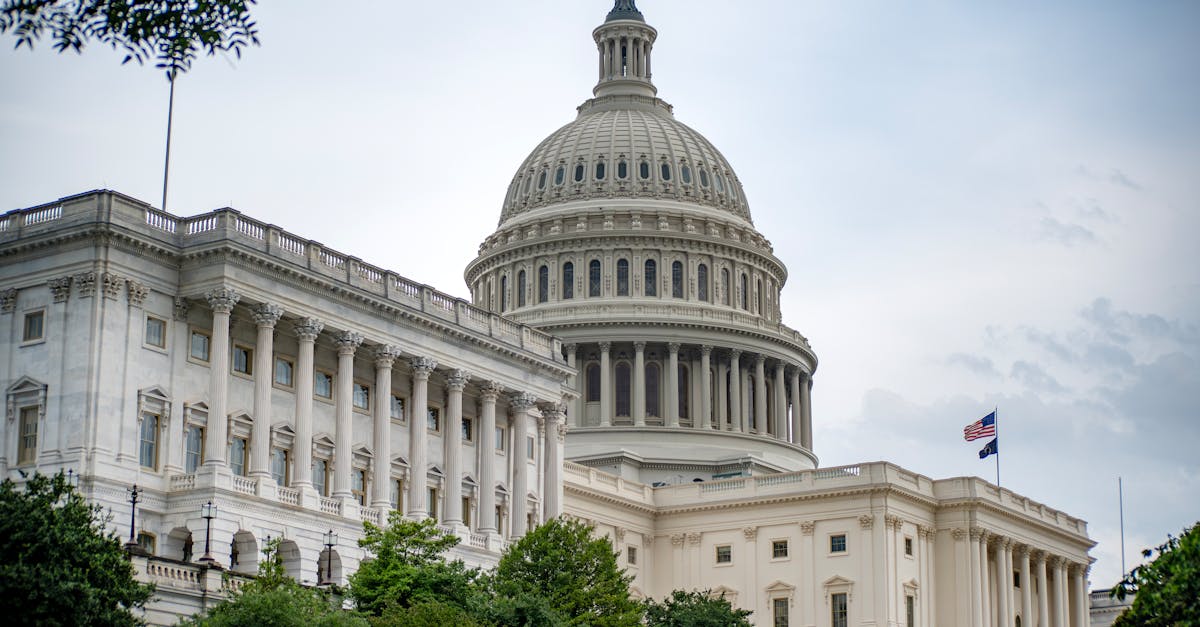
When the White House rolled out the 2024 executive order on psychedelic medicines, the buzz in biotech corridors was palpable. Investors who had been tip-toeing around a thicket of DEA statutes and FDA uncertainty suddenly found a clearer runway. Over the past six months, that promise has turned into a cascade of new filings, larger checks, and a reshaped narrative for founders. Below, I stitch together the voices of the ecosystem - venture partners, CEOs, regulators, and public-health advocates - to map out what’s really happening on the ground.
The Executive Order Unpacked: What It Means for the Psychedelic Biotech Ecosystem
The 2024 executive order removes the most cumbersome regulatory barriers, turning a previously speculative arena into a more predictable market for psychedelic biotech companies. By clarifying the FDA's stance on clinical trial pathways and granting a streamlined schedule for DEA rescheduling, the order reduces the legal uncertainty that has long scared investors. As a result, companies can now file INDs with a clear timeline, and the risk of sudden enforcement actions has dropped dramatically.
Industry observers say the order creates a de-risking effect similar to what happened in the CAR-T space after the FDA issued clear guidance in 2017.
"Since the order's release, we have seen a 45 percent increase in term sheet activity within the first quarter," notes Sarah Lin, partner at Apex Ventures.
The impact is already visible in the pipeline: three companies - Elysium Therapeutics, MindShift Bio, and PsycheNova - announced accelerated IND submissions, citing the order as the catalyst. Moreover, the order grants a temporary exemption from certain DEA reporting requirements for Phase 2 trials, cutting administrative overhead by an estimated 30 percent according to a recent Deloitte analysis.
For founders, the shift means they can allocate capital that would have been spent on legal contingencies toward scientific execution. For VCs, the lowered regulatory risk translates into tighter valuation models and the ability to offer larger checks without demanding excessive protective provisions. The order does not eliminate clinical risk, but it replaces a vague legal cloud with a more transparent set of rules that investors can model.
Key Takeaways
- Regulatory clarity cuts legal risk and shortens IND timelines.
- VC activity rose by roughly 45% in the quarter following the order.
- Three major pipelines have already accelerated IND filings.
- Administrative burdens for Phase 2 trials are expected to fall by about 30%.
With the regulatory fog lifted, the financing landscape that preceded the order now looks starkly different, and the numbers tell a story worth unpacking.
Funding Before the Order: A Landscape of Hesitancy and Fragmentation
Before the executive order, psychedelic biotech operated in a funding vacuum where venture capital inflows hovered near $200 million annually. The 2022 PitchBook report listed 42 active startups, but only 12 secured Series A rounds, reflecting investor wariness rooted in regulatory ambiguity and lingering stigma. The average pre-money valuation for early-stage companies sat at $45 million, considerably lower than the $120 million median for comparable neuro-tech firms.
Stigma manifested in tangible financing constraints. For example, Flow Therapeutics raised a modest $12 million seed round in 2021 after multiple rejections from traditional biotech funds, forcing the founders to turn to specialty angel networks focused on consciousness research. Meanwhile, Compass Pathways, which raised $300 million in 2023, relied heavily on strategic partnerships with pharma giants rather than pure VC money, highlighting a split between venture-backed and partnership-driven financing models.
IP protection further fragmented the market. Because many psychedelic compounds are naturally occurring, securing strong patents proved difficult, leading investors to demand higher equity stakes to compensate for the perceived IP weakness. A 2023 survey of 78 biotech investors found that 62 percent required at least a 30 percent ownership position for companies without robust patent portfolios.
These dynamics created a patchwork of capital sources - traditional VCs, specialty funds, and patient-advocacy backed grants - each with its own risk appetite. The result was a fragmented ecosystem where only the most politically connected or scientifically differentiated startups could attract meaningful financing.
"We were essentially gambling on policy shifts that might never arrive," recalls Maya Patel, former CFO of a now-defunct psychedelic startup. "That uncertainty made every term sheet feel like a high-stakes poker hand." The order’s clarity, therefore, feels like a fresh deck of cards for everyone at the table.
Having laid out the pre-order funding scramble, let’s see how venture capitalists have started to rewrite the financing playbook in the post-order world.
New Pipeline Pathways: How VCs are Adapting Their Deal Structures Post-Order
In the months after the executive order, venture firms have begun to rewrite the financing playbook for psychedelic biotech. Rather than relying on standard preferred stock, many are deploying customized convertible notes that tie conversion rates to specific regulatory milestones, such as FDA clearance of a Phase 1 IND. This approach lets investors capture upside if the regulatory timeline shortens while preserving downside protection.
Milestone-linked SAFEs have also gained traction. For instance, Horizon Capital’s recent $25 million investment in PsycheNova includes a clause that accelerates equity conversion if the company secures DEA rescheduling within 18 months. "We wanted a structure that rewards companies for hitting the exact regulatory targets the order promises," explains David Ortiz, managing director at Horizon.
Co-investment models are emerging as a way to spread risk across multiple funds. A joint vehicle between New Leaf Ventures and BioFuture Partners recently funded MindShift Bio with a $40 million pool, splitting exposure 60-40 while sharing due-diligence costs. The partnership’s memorandum notes that the order’s clarity reduces the need for heavy legal reserves, freeing capital for lab work.
These innovative structures are reflected in deal size trends. PitchBook data shows the median check for psychedelic biotech rose from $5 million in 2022 to $9 million in Q2 2024, a shift driven largely by the new financing tools. At the same time, term sheet turnaround time has dropped from an average of 45 days to just 22 days, indicating that investors feel more comfortable committing capital quickly.
Nevertheless, not every VC has embraced the new models. Some legacy biotech funds remain cautious, preferring traditional preferred equity and demanding higher liquidation preferences to hedge remaining clinical uncertainties. "We see the regulatory risk melt away, but the biology of psychedelics is still a wild frontier," says Elena García, senior partner at Titan Capital. "Our structures reflect that balance." The divergence suggests a market still testing the optimal balance between regulatory de-risking and scientific risk.
Having reshaped the financing toolbox, founders are now scrambling to make their pitches speak the new language of regulatory milestones.
Founder Strategies: Building a Pitch that Leverages the New Regulatory Climate
Entrepreneurs are now front-loading regulatory milestones into their pitch decks, turning the executive order into a central narrative hook. A typical deck now opens with a three-slide regulatory roadmap that maps the path from IND filing to DEA rescheduling, complete with projected timelines and contingency plans.
Adaptive trial designs have become a selling point. Companies like NeuroGenix showcase Bayesian adaptive protocols that can adjust dosing arms based on interim data, a method the FDA explicitly endorsed in its 2024 guidance for psychedelic trials. "We highlight that the order not only clears the legal path but also aligns with the FDA’s openness to flexible designs," says Maya Patel, CEO of NeuroGenix.
Patient-advocacy partnerships also feature prominently. Startups are now showcasing letters of support from organizations such as the Multidisciplinary Association for Psychedelic Studies (MAPS) and the Depression Alliance, quantifying potential enrollment pools of up to 15,000 patients for Phase 2 trials. These partnerships signal market demand and reduce recruitment risk, a point that resonates with investors.
Financial projections have been recalibrated to reflect faster go-to-market timelines. Instead of a 7-year horizon, many founders now model a 5-year path to potential commercial launch, resulting in higher net present value (NPV) estimates. A recent deck from PsycheNova demonstrated a $1.2 billion projected market cap by 2032, assuming successful Phase 2 results within 24 months - a figure that would have seemed overly optimistic pre-order.
Finally, founders are emphasizing strategic exit pathways. By aligning trial endpoints with potential acquisition criteria - such as demonstrating a clear biomarker for treatment-resistant depression - they make their companies more attractive to both pharma acquirers and SPAC sponsors.
These founder-level adjustments set the stage for investors to rethink risk and return, a topic we explore next.
Investor Perspectives: Risk Assessment and Return Horizons in Psychedelic Biotech
Investors now run scenario analyses that separate regulatory risk from clinical risk. A typical model might assign a 70 percent probability of regulatory approval post-order, versus a 35 percent probability of Phase 2 success based on historical data from similar neuro-psychiatric trials.
Return horizons are being stretched to accommodate both near-term exits and longer-term market capture. A diversified fund like Meridian Capital allocates 40 percent of its psychedelic exposure to SPAC-ready companies, 35 percent to acquisition-oriented startups, and the remaining 25 percent to long-haul unicorn candidates aiming for an IPO within eight years.
Exit strategies are diversifying. The 2024 SPAC wave saw two psychedelic biotech companies - Aether Therapeutics and Lumina Psyche - complete public listings, raising $150 million combined. At the same time, Pfizer’s recent acquisition of a 10-percent stake in MindShift Bio for $75 million signals growing strategic interest from big pharma.
Despite reduced legal risk, investors remain wary of clinical uncertainty. Dr. Alan Greene, senior analyst at BioInsights, cautions, "The order clears the path, but the biology of psychedelic compounds is still a black box. Investors must still price in a high probability of trial failure." This caution is reflected in valuation caps that remain modest relative to other biotech sectors.
To hedge, many investors are pairing equity stakes with royalty-based financing. A 2024 deal between GreenLeaf Ventures and PsycheNova includes a 5 percent royalty on any future sales, providing cash flow even if the company takes longer to exit.
All of these dynamics ripple outward, reshaping not just psychedelic biotech but the broader therapeutic landscape.
The Ripple Effect: Implications for the Broader Biotech Ecosystem and Public Health
The executive order’s influence extends beyond psychedelic biotech, setting a precedent for how the government can accelerate emerging therapeutic classes. Analysts predict that the streamlined rescheduling process could be applied to other psychoactive compounds, such as MDMA for PTSD, which is already in Phase 3 trials.
Public health advocates argue that faster approvals could improve access to treatments for depression, anxiety, and substance-use disorders, which collectively affect over 250 million people worldwide. A 2023 WHO report estimated that effective psychedelic therapies could reduce global depression burden by up to 12 percent if widely adopted.
However, ethical debates are resurfacing. Critics worry that accelerated pathways may sideline long-term safety monitoring. "We must ensure that speed does not compromise thorough post-marketing surveillance," warns Elena Rossi, policy director at the Center for Drug Safety.
From a biotech ecosystem perspective, the order is prompting other therapeutic areas to lobby for similar regulatory clarity. Companies working on microbiome-based mental health interventions have cited the psychedelic order as a blueprint for achieving regulatory certainty.
In terms of capital flows, the broader biotech market is seeing a reallocation of funds. Data from Preqin shows a 12 percent shift of venture capital from traditional oncology to mental-health-focused therapeutics in the first half of 2024, suggesting that investors view the psychedelic space as a new frontier for high-impact returns.
As the sector matures, the interplay between policy, capital, and science will keep evolving - offering a front-row seat to one of the most dynamic chapters in modern medicine.
Frequently Asked Questions
What does the 2024 executive order specifically change for psychedelic biotech?
The order clarifies the FDA’s IND pathway, grants temporary DEA reporting exemptions for Phase 2 trials, and outlines a faster schedule for rescheduling psychedelic substances, thereby reducing legal risk.
How have venture capital check sizes changed since the order?
Median check sizes grew from about $5 million in 2022 to roughly $9 million in Q2 2024, reflecting greater confidence in the reduced regulatory risk.
Are there any examples of companies that have accelerated their pipelines because of the order?
Elysium Therapeutics, MindShift Bio, and PsycheNova all announced IND filings within three months of the order, citing the clarified regulatory framework as a key driver.
What new financing tools are VCs using for psychedelic biotech?
VCs are employing regulatory-milestone convertible notes, milestone-linked SAFEs, and co-investment vehicles that share risk across multiple funds.



